The title doesn't mean I am asking where we go in 2014 but it is the name of the largest developer conference in Germany happening next week April 8th to 10th.
My talk on Thursday morning will dissect the monetization of Puzzle & Dragons. After my talk about doing the same with World of Tanks was so successful I decided to expand those topics. Btw this is the first talk I will hold on an iPhone!
At Casual Connect 2014 in San Francisco in July I will repeat that exercise with League of Legends.
I am doing this simply to educate teams how these games work. I usually pick top f2p games for this as they aren't at all "evil" - which seems to be a major criticism of f2p. I assign 3 pillars on those dissections:
Public Metrics
Numbers and data I find online, either from services like Appannie, Comcast or simply from the game providers PR or shareholder messages.
Own Monetization & Online Game Experience
I use my professional skills to take the game apart into its foundations and mechanics and examine them for their functions.
Self Experimentation
I play the game as a player for a while (usually until mid game) and then as a payer (note the missing L) and research what this changes in the game experience compared to the former experiment.
Those three usually give me enough information to understand fully how the game works in terms of game mechanics & monetization.
I hope to see you at one of the above conferences.
Blog about Free to Play (F2P), Mobile Games, Online Games or the Game Industry in general by Teut Weidemann.
2014/04/06
2014/03/13
GDC 2014
I am off to GDC 2014 in San Francisco tomorrow. Besides being the largest developer conference of the world with over 20.000 attendees the 2014 will be important simply because we are in transition years (see previous post).
A lot of talks will focus on the new generation of consoles, others on the other cool stuff happening like indie, f2p, digital etc.
I also expect a major announcement from Amazon, you read it here first.
(Edit::told you so: http://gizmodo.com/amazon-fire-tv-hands-on-the-fastest-smart-tv-youve-ev-1556986083/@jschreier)
I might blog the major findings during my stay - that depends on my internet, jet lag and hang overs.
A lot of talks will focus on the new generation of consoles, others on the other cool stuff happening like indie, f2p, digital etc.
I also expect a major announcement from Amazon, you read it here first.
(Edit::told you so: http://gizmodo.com/amazon-fire-tv-hands-on-the-fastest-smart-tv-youve-ev-1556986083/@jschreier)
I might blog the major findings during my stay - that depends on my internet, jet lag and hang overs.
Labels:
Development,
GDC,
monetization
2014/03/06
Transition Years
In 2004 I made a talk on Quo Vaids, the largest German developer conference, about our game industry cycle. (btw. the next Quo Vadis is in April, highly recommended!). This talk was adapted into a major article on MCV, the leading industry magazine by its time.
From there on people knew what it meant to be in a transition year. Although the term "transition year" was coined by EA I can take credit assembling the facts and regular events what a transition cycle causes.
Basically the games industry goes through a cycle which is kicked off whenever a new console enters the market. The old one doesn't do the revenue anymore it used to and the new one hasn't grown enough yet to do good revenue.
This forces the big players into a conservative mode which means:
- Studios are getting shut down
- Media spending is reduced
- Releases are safe bets, i.e. sequels
The side effects are usually that independent studios are no longer able to place their next developments and shut down if they don't have already one under contract. Also some media are shutting down like games magazines or game web sites as the reduced media spending also hits them.
However as developers and teams are looking for alternative revenue streams they put their creativity into other platforms like the new wave of good games on PC digital or the immense growth on mobile games this transition cycle. Some also find ways into f2p on consoles or PC.
Why is this important? Because 2013/2014 is the current transition year where bad things already happened and worse is still to come. From the last count of studio closures at least over 15000 developers were laid off over the course of the last 18 months in USA and Europe. Some cities were laid to waste in terms of game development like Austin or Boston.
Why I am saying this? Simply because I want to calm you guys down that this is perfectly normal and part of our cycle. It is like hitting Ctrl-Alt Delete and re-install. Everything will be smoother and better afterwards, you just need to be prepared.
Not complete overview, just samples:
Disney
http://kotaku.com/disney-lays-off-700-employees-1537889729
Lucas
http://kotaku.com/how-lucasarts-fell-apart-1401731043
Eidos
http://kotaku.com/big-layoffs-at-thief-developer-eidos-montreal-1536315021
Bioshock Devs
http://kotaku.com/what-next-for-dozens-of-ex-bioshock-game-creators-1525989099
EA
http://www.polygon.com/2013/10/29/5043244/ea-cancels-free-to-play-command-and-conquer
http://gamepolitics.com/2013/07/12/ea-closes-phenomic-studio#.Uxi7Cvl5Mg8
http://www.gamesindustry.biz/articles/2013-09-30-ea-closes-north-carolina-studio-report
http://www.gamasutra.com/view/news/187793/Dragon_Age_Legends_studio_BioWare_San_Francisco_closes__report.php
http://www.gamasutra.com/view/news/187116/EA_lays_off_workers_across_multiple_studios.php#.UTW-ZldZcaU
http://www.digitaltrends.com/gaming/ea-confirms-medal-of-honor-studio-danger-close-is-no-more/#!yJiMy
http://hothardware.com/News/EA-Cuts-More-Jobs-Shuts-Down-PopCap-Vancouver-and-Quicklime-Studios-Total-Number-of-Casualties-Unknown/
THQ
http://www.wired.com/gamelife/2013/01/thq-bankrupt/
Misc
http://techcrunch.com/2012/12/06/gree-layoffs/
http://www.polygon.com/2013/1/4/3836168/social-games-developer-majesco-boston-shuts-down-say-former-employees
http://allthingsd.com/20130603/zynga-to-lay-off-520-employees-18-percent-of-staff-and-shutter-new-york-and-la-offices/
From there on people knew what it meant to be in a transition year. Although the term "transition year" was coined by EA I can take credit assembling the facts and regular events what a transition cycle causes.
Basically the games industry goes through a cycle which is kicked off whenever a new console enters the market. The old one doesn't do the revenue anymore it used to and the new one hasn't grown enough yet to do good revenue.
This forces the big players into a conservative mode which means:
- Studios are getting shut down
- Media spending is reduced
- Releases are safe bets, i.e. sequels
The side effects are usually that independent studios are no longer able to place their next developments and shut down if they don't have already one under contract. Also some media are shutting down like games magazines or game web sites as the reduced media spending also hits them.
However as developers and teams are looking for alternative revenue streams they put their creativity into other platforms like the new wave of good games on PC digital or the immense growth on mobile games this transition cycle. Some also find ways into f2p on consoles or PC.
Why is this important? Because 2013/2014 is the current transition year where bad things already happened and worse is still to come. From the last count of studio closures at least over 15000 developers were laid off over the course of the last 18 months in USA and Europe. Some cities were laid to waste in terms of game development like Austin or Boston.
Why I am saying this? Simply because I want to calm you guys down that this is perfectly normal and part of our cycle. It is like hitting Ctrl-Alt Delete and re-install. Everything will be smoother and better afterwards, you just need to be prepared.
Not complete overview, just samples:
Disney
http://kotaku.com/disney-lays-off-700-employees-1537889729
Lucas
http://kotaku.com/how-lucasarts-fell-apart-1401731043
Eidos
http://kotaku.com/big-layoffs-at-thief-developer-eidos-montreal-1536315021
Bioshock Devs
http://kotaku.com/what-next-for-dozens-of-ex-bioshock-game-creators-1525989099
EA
http://www.polygon.com/2013/10/29/5043244/ea-cancels-free-to-play-command-and-conquer
http://gamepolitics.com/2013/07/12/ea-closes-phenomic-studio#.Uxi7Cvl5Mg8
http://www.gamesindustry.biz/articles/2013-09-30-ea-closes-north-carolina-studio-report
http://www.gamasutra.com/view/news/187793/Dragon_Age_Legends_studio_BioWare_San_Francisco_closes__report.php
http://www.gamasutra.com/view/news/187116/EA_lays_off_workers_across_multiple_studios.php#.UTW-ZldZcaU
http://www.digitaltrends.com/gaming/ea-confirms-medal-of-honor-studio-danger-close-is-no-more/#!yJiMy
http://hothardware.com/News/EA-Cuts-More-Jobs-Shuts-Down-PopCap-Vancouver-and-Quicklime-Studios-Total-Number-of-Casualties-Unknown/
THQ
http://www.wired.com/gamelife/2013/01/thq-bankrupt/
Misc
http://techcrunch.com/2012/12/06/gree-layoffs/
http://www.polygon.com/2013/1/4/3836168/social-games-developer-majesco-boston-shuts-down-say-former-employees
http://allthingsd.com/20130603/zynga-to-lay-off-520-employees-18-percent-of-staff-and-shutter-new-york-and-la-offices/
Labels:
Game Industry,
games industry,
industry,
teut
2014/03/03
Steam kills PC Games
Steam announced that publishers on Steam can now run their own sales. Why this is bad I won't say here simply because he said it all:
http://www.gamesbrief.com/2014/03/valve-has-just-started-the-pc-games-race-to-zero/
Just this much: this will be bad, a massaker, a bloodbath. With only one survivor.
http://www.gamesbrief.com/2014/03/valve-has-just-started-the-pc-games-race-to-zero/
Just this much: this will be bad, a massaker, a bloodbath. With only one survivor.
2014/02/20
I told you so
When a chat app is worth 19 billion dollars
When a match 3 puzzle game makes more than 1.8 billion a year
When a match 3 RPG mixed with Pokemon makes more than 1 billion a year
When a 3 year old 90 people game developer is valued at 1.5 billion
Then our world is not like it was before.
I told you so.
Don't complain only because you missed the train.
I just leave this here for you to read up in a few years.
When a match 3 puzzle game makes more than 1.8 billion a year
When a match 3 RPG mixed with Pokemon makes more than 1 billion a year
When a 3 year old 90 people game developer is valued at 1.5 billion
Then our world is not like it was before.
I told you so.
Don't complain only because you missed the train.
I just leave this here for you to read up in a few years.
Labels:
Game Industry,
games industry,
mobile,
talk,
teut
2014/02/18
Buy Banished
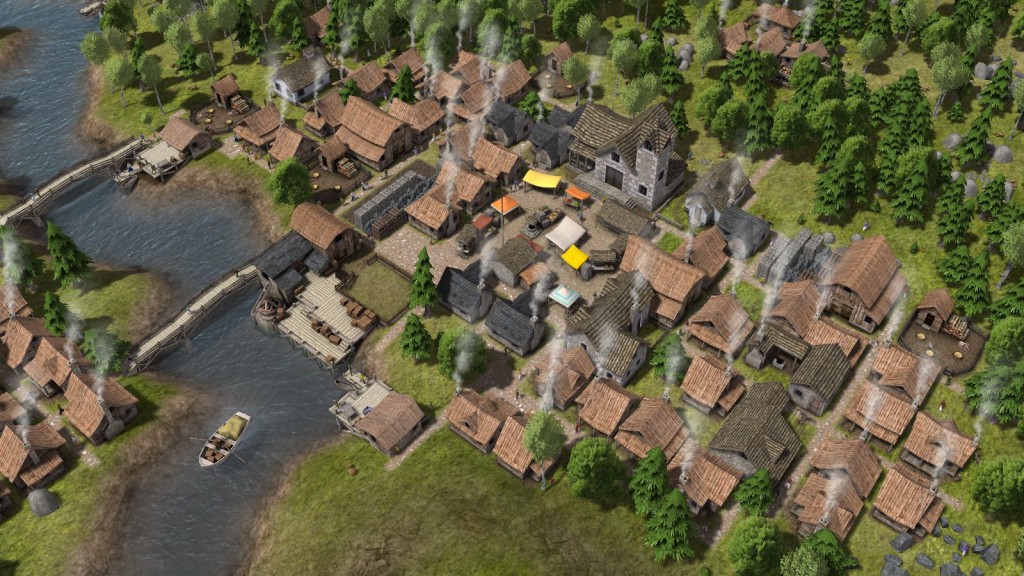
I rarely do this but I would love you to take a look at this indie game and give it a try. It was released just today (and will be on Steam tonight) and is a resource management game just like Settlers or SimCity. Beware that the learning curve is steeper so I recommend the tutorials first.
Information about the game: http://www.shiningrocksoftware.com/game/
Buy Humble Link: http://www.shiningrocksoftware.com/buy/
Information about the game: http://www.shiningrocksoftware.com/game/
Buy Humble Link: http://www.shiningrocksoftware.com/buy/
Labels:
buy,
game design,
games industry,
indie,
industry,
teut
2014/02/17
Evil Game Design Challenge
On Casual Connect 2014 in Amsterdam I had the chance to take part in an evil game design challenge. The goal was to take Minecraft and convert it into an evil but working f2p title. My contenders Ben Cousins and Laralyn McWilliams were tough challenges but I overcome them with rhetoric I guess. While Ben delivered the most professional design Laralyn viewed the experience from the players view and motivations - considering she has a strong MMO background that is logical.
We had similar designs simply because Minecraft is obvious to monetize but I think I won the "evil" part of it - which was the key of the challenge, right? Remember this isn't serious - its over the edge.
Somehow I can't insert the video here so I leave the link:
http://www.youtube.com/watch?v=yMXBSri_Ttc
We had similar designs simply because Minecraft is obvious to monetize but I think I won the "evil" part of it - which was the key of the challenge, right? Remember this isn't serious - its over the edge.
Somehow I can't insert the video here so I leave the link:
http://www.youtube.com/watch?v=yMXBSri_Ttc
2014/02/08
Oculus Rant
The Oculus Rift sells a dream, a dream we can enter virtual worlds completely. The founder even says:
"one of the most important technologies in the history of mankind”
What? I think we might mix up the technology described in books like "Ready Player One" with simple head tracking & displays in front of your eyes.
Many people forget that this whole Rift thing was a hype years ago back in 1995 - and failed utterly. Those people praising the latest tries of Oculus Rift do not read up the documents of Fraunhofer or Professors or Universities why the Virtual Reality Goggles failed back in 1995 (that is how they were called in the past). And yes all those scientists and experts were involved in this VR thing back int he 90's.
UThe problems of the VR glasses aren't solved yet close to 20 years after the first hype. If they don't start to tackle them Oculus Rift and the new generation of 'VR' will vanish as did the hype around 1995. And the problem isn't in the technology, the problem is inside the human head.
Don't get me wrong. I wish those glasses were possible, but it is harder than they think to make a marketable product out of this without customers puking all over their computer due to motion sickness.
"one of the most important technologies in the history of mankind”
What? I think we might mix up the technology described in books like "Ready Player One" with simple head tracking & displays in front of your eyes.
Many people forget that this whole Rift thing was a hype years ago back in 1995 - and failed utterly. Those people praising the latest tries of Oculus Rift do not read up the documents of Fraunhofer or Professors or Universities why the Virtual Reality Goggles failed back in 1995 (that is how they were called in the past). And yes all those scientists and experts were involved in this VR thing back int he 90's.
UThe problems of the VR glasses aren't solved yet close to 20 years after the first hype. If they don't start to tackle them Oculus Rift and the new generation of 'VR' will vanish as did the hype around 1995. And the problem isn't in the technology, the problem is inside the human head.
Don't get me wrong. I wish those glasses were possible, but it is harder than they think to make a marketable product out of this without customers puking all over their computer due to motion sickness.
| VFX1 Headgear from back in 1994 |
Labels:
Game Industry,
games industry,
Oculus,
Oculus Rift,
talk,
teut
2014/01/28
Good F2p games clones and what it means for you
Well guess what: most successful f2p games are all clones of existing games. Or at least close adaptions.
Lets check some out.
Clash of Clans (iOS)
The best monetizing f2p game from the west does 2 million US$ a day, but the team did a close to identical game called Galaxy Life in their former company Digital Chocolate, which again is an adaption of a Facebook Game called Edgeworld by Kabam.
HayDay
By the same developer Supercell this is basically a Farmville variant. A good one yes, but still a lot of mechanics were taken from that old Facebook game by Zynga (which in turn cloned it from an Asian game)
League of Legends
Yes, even they adapted the grandfather of Moba, a Mod for Warcraft III called Dota. And yes, Dota2 is the sequel. Of course the setting and graphics changed, but the fundamental principle of the game remained the same (and yes, I know the guy is one of the original Dota mod creators)
Puzzle Dragons
A match three game with RPG elements and monster fusion meets Pokemon. The most successful mobile game from Asia even dwarfing Clash of Clans in revenue. Variations were available before (like Puzzle Quest) but not the mix like they did. Clones are appearing daily.
Candy Crush Saga
Well take Bejeweled, attach a meta game and progress, voila you have a game which does 30m a month. Many tried but King.com Saga recipe seems to work for casual games. Only after Candy Crush moved to iOS it bat their former revenue king Bubble Witch Saga which doesn't work on mobile as well due to interface issues. Clones have been tried, the more successful ones are even from the same publisher King.com. None can reach the success (and if you wonder there is a reason for it).
World of Tanks
Counterstrike with tanks. Nothing special right? Attach a progression system and monetization and voilá you have a hit. I might be too simplistic but under the hood WoT is nothing else.
So what did those games above do to actually be that successful? The numbers are extreme. Millions of users, millions of revenue even daily. The above games dominate the f2p online space. No wonder companies try to clone those games - some even 1:1- all those images are from a different Clash of Clans clone.
It seems there is enough potential in old successful game loops that you simply take these, attach a meta game with progression and monetization strategy and you might have a million seller. It seemed to work for the companies above right?
What really happens is that f2p is still young and exploring new areas, so expect more mature games (or more core as you would say) to expand into f2p space soon, so that the two leaders LoL and WoT can be challenged.
Also expect any game loop you know to be misused as a f2p game at some point. Some already have been tested like Black Jack, Golf, Poker, Asteroids, Mahjong etc. It is a formula and simple (core gamne loop + Meta game & progression) and will be exploited as such. It is so simple that I wonder why the huge wave of these games hasn't arrived yet.
Lets check some out.
Clash of Clans (iOS)
The best monetizing f2p game from the west does 2 million US$ a day, but the team did a close to identical game called Galaxy Life in their former company Digital Chocolate, which again is an adaption of a Facebook Game called Edgeworld by Kabam.
HayDay
By the same developer Supercell this is basically a Farmville variant. A good one yes, but still a lot of mechanics were taken from that old Facebook game by Zynga (which in turn cloned it from an Asian game)
League of Legends
Yes, even they adapted the grandfather of Moba, a Mod for Warcraft III called Dota. And yes, Dota2 is the sequel. Of course the setting and graphics changed, but the fundamental principle of the game remained the same (and yes, I know the guy is one of the original Dota mod creators)
Puzzle Dragons
A match three game with RPG elements and monster fusion meets Pokemon. The most successful mobile game from Asia even dwarfing Clash of Clans in revenue. Variations were available before (like Puzzle Quest) but not the mix like they did. Clones are appearing daily.
Candy Crush Saga
Well take Bejeweled, attach a meta game and progress, voila you have a game which does 30m a month. Many tried but King.com Saga recipe seems to work for casual games. Only after Candy Crush moved to iOS it bat their former revenue king Bubble Witch Saga which doesn't work on mobile as well due to interface issues. Clones have been tried, the more successful ones are even from the same publisher King.com. None can reach the success (and if you wonder there is a reason for it).
World of Tanks
Counterstrike with tanks. Nothing special right? Attach a progression system and monetization and voilá you have a hit. I might be too simplistic but under the hood WoT is nothing else.
So what did those games above do to actually be that successful? The numbers are extreme. Millions of users, millions of revenue even daily. The above games dominate the f2p online space. No wonder companies try to clone those games - some even 1:1- all those images are from a different Clash of Clans clone.
It seems there is enough potential in old successful game loops that you simply take these, attach a meta game with progression and monetization strategy and you might have a million seller. It seemed to work for the companies above right?
What really happens is that f2p is still young and exploring new areas, so expect more mature games (or more core as you would say) to expand into f2p space soon, so that the two leaders LoL and WoT can be challenged.
Also expect any game loop you know to be misused as a f2p game at some point. Some already have been tested like Black Jack, Golf, Poker, Asteroids, Mahjong etc. It is a formula and simple (core gamne loop + Meta game & progression) and will be exploited as such. It is so simple that I wonder why the huge wave of these games hasn't arrived yet.
Labels:
f2p,
facebook,
free to play,
game design,
industry,
League of Legends,
LoL,
monetization,
online,
talk,
teut
2014/01/25
Steam Machines will fail
I won't write a lengthy blog post about them. I simply predict they will fail. Read on.
The Gordon Kelly sums it up in the comments with these questions:
1. Can you can tell me why a mainstream user would buy a Steam Machine over a console?
2. Can you tell me why hardcore gamers would buy a Steam Machine over a standard PC?
Read yourself here: http://goo.gl/5hIWgE
The Gordon Kelly sums it up in the comments with these questions:
1. Can you can tell me why a mainstream user would buy a Steam Machine over a console?
2. Can you tell me why hardcore gamers would buy a Steam Machine over a standard PC?
Read yourself here: http://goo.gl/5hIWgE
Labels:
industry,
steam,
steam machine,
talk,
teut
Never underestimate Nintendo
Well, it happens every console cycle that industry experts want to tell Nintendo what to do. Just check the headlines here:
http://www.gamesindustry.biz/
Thats really funny. If Nintendo would have listened to those experts the last cycle they would have been gone by now. And guess what: which console sold most last gen?
I wrote about this a lot of time, simply use the label Nintendo.
Some rules about Nintendo:
#1: it is a Japanese company, i.e. they think differently
#2: Nintendo has patience. Decades of patience. It is 125 years old ffs
#3: Nintendo is rich. They don't even need to sell consoles to be richer
#4: Nintendo always did their thing. They were wrong before and it didn't hurt (Virtua Boy, Powerglove)
#5: Nintendo isn't and never was for the core gamer. But our industry writes for the core gamer
And this time the internet remembers your articles and I will pull it out and call YOUR NAME with all the crap you experts have written :)
http://www.gamesindustry.biz/
Thats really funny. If Nintendo would have listened to those experts the last cycle they would have been gone by now. And guess what: which console sold most last gen?
I wrote about this a lot of time, simply use the label Nintendo.
Some rules about Nintendo:
#1: it is a Japanese company, i.e. they think differently
#2: Nintendo has patience. Decades of patience. It is 125 years old ffs
#3: Nintendo is rich. They don't even need to sell consoles to be richer
#4: Nintendo always did their thing. They were wrong before and it didn't hurt (Virtua Boy, Powerglove)
#5: Nintendo isn't and never was for the core gamer. But our industry writes for the core gamer
And this time the internet remembers your articles and I will pull it out and call YOUR NAME with all the crap you experts have written :)
2014/01/20
iOS App Store congestion
Many developers and publishers alike are worried about visibility on the App store. To counter this they try to spend more and more money on user acquisition. Or they find creative ways to game the App Store.
However there is another obvious way getting your App visible. Have a bloody good & distinct game.
If you do whatever everyone else is doing then the only way to separate you from them is either price or marketing spend (aka visibility). Price is tough as you can't go cheaper than free (well you can, but that is not here yet).
Lets see some examples: strategy games. There are really bloody good strategy games on the App Store. Check them out yourself: http://toucharcade.com/top-reviews/strategy/?time=all
Just look at the 5 star rated ones. Awesome isn't it. The key trick is that I put on "life time", i.e. all 5 star rated games since the App Store exists from that site.
Why this? Because the iPhone to an extend doesn't change a lot in terms of games. Practically you compete against all games having been released since ... lets say the iPhone 4, that was in 2010.
This is what I am worried about more than visibility. In the next few years you need to compete against all hits since 2010. That is kind of unique. On consoles hits from 2 years ago aren't really competing anymore with you. On iOS they are.
Look at the top grossing charts. do you realize that most of these have been released prior 2013?
Check yourself: http://blog.tapjoy.com/app-development/what-do-apples-top-grossing-iphone-apps-of-2013-all-ha/
So if you plan to make a runner game for example don#t do this unless you are 100% sure you are going to revolutionize that genre. Or a tower defense game.
Do what no one does. Or do it entirely different. Be bold. Be different. But be realistic.
Also check this list out (Metacritic): http://www.metacritic.com/browse/games/genre/metascore/strategy/ios?view=condensed
And do me a favour and buy one of my all time favorite real time strategy games on iOS: Red Conquest.
However there is another obvious way getting your App visible. Have a bloody good & distinct game.
If you do whatever everyone else is doing then the only way to separate you from them is either price or marketing spend (aka visibility). Price is tough as you can't go cheaper than free (well you can, but that is not here yet).
Lets see some examples: strategy games. There are really bloody good strategy games on the App Store. Check them out yourself: http://toucharcade.com/top-reviews/strategy/?time=all
Just look at the 5 star rated ones. Awesome isn't it. The key trick is that I put on "life time", i.e. all 5 star rated games since the App Store exists from that site.
Why this? Because the iPhone to an extend doesn't change a lot in terms of games. Practically you compete against all games having been released since ... lets say the iPhone 4, that was in 2010.
This is what I am worried about more than visibility. In the next few years you need to compete against all hits since 2010. That is kind of unique. On consoles hits from 2 years ago aren't really competing anymore with you. On iOS they are.
Look at the top grossing charts. do you realize that most of these have been released prior 2013?
Check yourself: http://blog.tapjoy.com/app-development/what-do-apples-top-grossing-iphone-apps-of-2013-all-ha/
So if you plan to make a runner game for example don#t do this unless you are 100% sure you are going to revolutionize that genre. Or a tower defense game.
Do what no one does. Or do it entirely different. Be bold. Be different. But be realistic.
Also check this list out (Metacritic): http://www.metacritic.com/browse/games/genre/metascore/strategy/ios?view=condensed
And do me a favour and buy one of my all time favorite real time strategy games on iOS: Red Conquest.
2014/01/14
2014/01/13
The WiiU CPU sucks - NOT
A recent anonymous post is making its rounds on social networks from a disgruntled developer:
http://www.eurogamer.net/articles/digitalfoundry-2014-secret-developers-wii-u-the-inside-story
While its worth reading make note that you can replace the word "WiiU" with any console in the past. Working on new consoles sucks. Launches are always messy. Some remember that Xbox development kits where Apple Macintoshes. Imagine that.
The point about the CPU clock speeds in the article is a bit extreme and wrong. Recent trends basically move more and more work into the GPU of your computer.
Wolfgang Engel, the "Shader God" of this industry (among others responsible for Lara Crofts Hair in Tomb Raider), explained it to me like this:
"GPUs move into the direction of CPUs since 2007. They become more general purpose. Fortunately they have a multi-core / multi-threading model that is very efficient and much easier to use.
On a fundamental level the difference between a CPU and GPU is the type of data they work on. GPUs work well on lots of similar "small" data sets while CPUs can work on more generic data. It turns out that games have a lot of those small data sets and that in general they became more common over the last 20 years with large amounts of data generated by computers.
So what we are seeing is that the importance of CPUs decreases in game consoles and the importance of GPUs increase. GPUs take over more and more CPU tasks.
This is why the XBOX One and PS4 have -compared to the PC market- rather slow CPUs but quite fast GPUs."
No reason to complain about low clock speeds of your CPU, simply learn proper shader language and do your work there. And that is where the major difference lies from the last generation of consoles: when the PS3 and Xbox 360 was designed the GPU's weren't developed with that general purpose architecture. Now they are.
Sidenote: as all three consoles use AMD chips as GPU's they basically define the GPU and Shader standard to come. I wouldn't buy nVidia shares now...
Edit: and more developers speak out:
http://nintendoenthusiast.com/news/3rd-party-wii-u-developers-speak/
http://www.eurogamer.net/articles/digitalfoundry-2014-secret-developers-wii-u-the-inside-story
While its worth reading make note that you can replace the word "WiiU" with any console in the past. Working on new consoles sucks. Launches are always messy. Some remember that Xbox development kits where Apple Macintoshes. Imagine that.
The point about the CPU clock speeds in the article is a bit extreme and wrong. Recent trends basically move more and more work into the GPU of your computer.
Wolfgang Engel, the "Shader God" of this industry (among others responsible for Lara Crofts Hair in Tomb Raider), explained it to me like this:
"GPUs move into the direction of CPUs since 2007. They become more general purpose. Fortunately they have a multi-core / multi-threading model that is very efficient and much easier to use.
On a fundamental level the difference between a CPU and GPU is the type of data they work on. GPUs work well on lots of similar "small" data sets while CPUs can work on more generic data. It turns out that games have a lot of those small data sets and that in general they became more common over the last 20 years with large amounts of data generated by computers.
So what we are seeing is that the importance of CPUs decreases in game consoles and the importance of GPUs increase. GPUs take over more and more CPU tasks.
This is why the XBOX One and PS4 have -compared to the PC market- rather slow CPUs but quite fast GPUs."
No reason to complain about low clock speeds of your CPU, simply learn proper shader language and do your work there. And that is where the major difference lies from the last generation of consoles: when the PS3 and Xbox 360 was designed the GPU's weren't developed with that general purpose architecture. Now they are.
Sidenote: as all three consoles use AMD chips as GPU's they basically define the GPU and Shader standard to come. I wouldn't buy nVidia shares now...
http://nintendoenthusiast.com/news/3rd-party-wii-u-developers-speak/
2014/01/12
Microsoft is losing one advantage on Xbox One
Microsoft is stupid sometimes. Well maybe more often than we like. Microsoft introduced the internet to consoles. The Xbox was a good start and they made it really good on the Xbox 360. Yes, they screwed up their interface and shop over time, but still it was much better compared to their counterparts Sony or Nintendo.
Why is this? My explanation is that both Nintendo and Sony are Japanese and in Japan the Internet never took off as big as in the western world. Online games never played a major role. The reason I guess is that PC's aren't used at home much due to space restrictions. Japanese people access the internet through their mobile phone. So they had all sorts of online services much sooner than we had. They already had full internet functions when UMTS was still in development in the western world.
If you look at how Nintendo handles the internet it can't get any worse. You add friends by using cryptic numbers like 435132. They claim to protect their kids customers. Sure. That can't excuse the bad online experiences you have with their club Nintendo or their eShop. If you ever tried to buy software there, recover your password or even link new devices you know what I am talking about. Abysmal user experiences.
Sony had the same problem for a long time but patched up their systems over time. Still it is odd that when you login the PlayStation Network on your PC and click on an advertised title to buy it you are redirected to their shop and need to LOGIN AGAIN. Besides only accepting credit cards (no point cards available) they have a decent collection of movies and TV series on top of their game offers.
The PS4 is slightly better in this regard but you see the Japanese style Internet of the 2000's working on all ends. I was surprised that Sony has the lead in live streaming over TwichTV on the PS4 while the Xbone feels like a closed system currently.
And that is my point: Microsoft is losing their big advantage they once had: The internet, online games, connectivity. And Sony is catching up fast. While Nintendo still doesn't understand how the internet works Sony is implementing features fast. Besides Twitch they offer now streaming services for PS3 games through their GaiKai aquisition. If that works well or not doesn't matter, what matters is that Microsoft must speed up their operating software development and store offers, otherwise they will continue to lose against Sony.
Why is this? My explanation is that both Nintendo and Sony are Japanese and in Japan the Internet never took off as big as in the western world. Online games never played a major role. The reason I guess is that PC's aren't used at home much due to space restrictions. Japanese people access the internet through their mobile phone. So they had all sorts of online services much sooner than we had. They already had full internet functions when UMTS was still in development in the western world.
If you look at how Nintendo handles the internet it can't get any worse. You add friends by using cryptic numbers like 435132. They claim to protect their kids customers. Sure. That can't excuse the bad online experiences you have with their club Nintendo or their eShop. If you ever tried to buy software there, recover your password or even link new devices you know what I am talking about. Abysmal user experiences.
Sony had the same problem for a long time but patched up their systems over time. Still it is odd that when you login the PlayStation Network on your PC and click on an advertised title to buy it you are redirected to their shop and need to LOGIN AGAIN. Besides only accepting credit cards (no point cards available) they have a decent collection of movies and TV series on top of their game offers.
The PS4 is slightly better in this regard but you see the Japanese style Internet of the 2000's working on all ends. I was surprised that Sony has the lead in live streaming over TwichTV on the PS4 while the Xbone feels like a closed system currently.
And that is my point: Microsoft is losing their big advantage they once had: The internet, online games, connectivity. And Sony is catching up fast. While Nintendo still doesn't understand how the internet works Sony is implementing features fast. Besides Twitch they offer now streaming services for PS3 games through their GaiKai aquisition. If that works well or not doesn't matter, what matters is that Microsoft must speed up their operating software development and store offers, otherwise they will continue to lose against Sony.
2014/01/11
Happy New Year!
Welcome to 2014. It will be an important year as the last generation of consoles will start to fade out while the new one takes over.
This Christmas will be the time of the new generation. The last hurrah of the last gen consoles will be in its software. Some good games are still to come.
The problem however is numbers. The last gen won't sell the millions of games it used to be simply because some users migrated to the new one, some users stored their consoles away or they simply break (remember the last gen is particularly prone to this).
The next gen won't have the numbers yet. GTA V sold zillions on a market with 140+ million consoles. The recent sales numbers of Xbone + PS4 are close to 8 million in total. If you extrapolate this to Christmas we might end up with maybe 24 million end of this year (both Xbone + PS4). Thats ca. 15% of the last gen market so publishers won't expect more than 20% of the revenues counting the effect in that there aren't many games yet and people buy everything they can get their hands on.
So the revenues of all publishers will be DOWN this and the next fiscal year (ending March 2015). Still it is an important step as afterwards we will end up with a better and healthier console market simply for some of these factors:
The PS4 and Xbone embraces online much better than the last gen. This will help smaller titles to be distributed online and make smaller console teams viable.
This will also allow MMO's to migrate to the consoles helping with long term revenue and retention for these titles. This include f2p titles (and first ones are very successful like Warframe)
More importantly the architecture of both consoles are very PC like as they use PC components. This will make cross platform development much cheaper and easier helping return of investment, lessening the risk of large scale AAA game development like Assassins Creed IV or GTA V was. You can basically develop for 2 consoles and PC at once without losing too much quality. The last gen had problems due to their custom architecture. Hint: this will push PC gaming a lot as a side effect.
So I expect further consolidation in 2014 until more money is being made on the markets (including mobile, online) which will have an investment effect in 2015+ soonest, maybe even as late as 2016. In 2016 we will be back in a market of 100m+ consoles making even more money than this gen. Remember this kind of investment has a lag of one fiscal year.
What about the other markets? Mobile will still grow (and is still growing in case you doubt it) but it is getting rather populated. The market is swamped with clones of games already existing making it even worse for new innovative games to be noticed. I think this is only a temporary phase until the markets mature and both developers and providers find ways to offer better visibility and customer acquisition. Signs of this are already there.
What about me? I will have public appearances in Helsinki at one of their Universities teaching f2p:
http://avp.aalto.fi/courses/games
I will also attend Casual Connect in Amsterdam participating in the Evil Game Design Challenge and talking about WoT:
http://europe.casualconnect.org/
Next I will attend Game Developers conference in SF analyzing the monetisation of World of Tanks:
http://www.gdconf.com/
Finally I will be in Berlin for Quo Vadis of course, ranting about our industry and giving German developers a glimpse what awaits them;
http://die-entwicklerkonferenz.de/
See you on one of these events or on this blog. Thank you for your loyalty and listening to my rants!
This Christmas will be the time of the new generation. The last hurrah of the last gen consoles will be in its software. Some good games are still to come.
The problem however is numbers. The last gen won't sell the millions of games it used to be simply because some users migrated to the new one, some users stored their consoles away or they simply break (remember the last gen is particularly prone to this).
The next gen won't have the numbers yet. GTA V sold zillions on a market with 140+ million consoles. The recent sales numbers of Xbone + PS4 are close to 8 million in total. If you extrapolate this to Christmas we might end up with maybe 24 million end of this year (both Xbone + PS4). Thats ca. 15% of the last gen market so publishers won't expect more than 20% of the revenues counting the effect in that there aren't many games yet and people buy everything they can get their hands on.
So the revenues of all publishers will be DOWN this and the next fiscal year (ending March 2015). Still it is an important step as afterwards we will end up with a better and healthier console market simply for some of these factors:
The PS4 and Xbone embraces online much better than the last gen. This will help smaller titles to be distributed online and make smaller console teams viable.
This will also allow MMO's to migrate to the consoles helping with long term revenue and retention for these titles. This include f2p titles (and first ones are very successful like Warframe)
More importantly the architecture of both consoles are very PC like as they use PC components. This will make cross platform development much cheaper and easier helping return of investment, lessening the risk of large scale AAA game development like Assassins Creed IV or GTA V was. You can basically develop for 2 consoles and PC at once without losing too much quality. The last gen had problems due to their custom architecture. Hint: this will push PC gaming a lot as a side effect.
So I expect further consolidation in 2014 until more money is being made on the markets (including mobile, online) which will have an investment effect in 2015+ soonest, maybe even as late as 2016. In 2016 we will be back in a market of 100m+ consoles making even more money than this gen. Remember this kind of investment has a lag of one fiscal year.
What about the other markets? Mobile will still grow (and is still growing in case you doubt it) but it is getting rather populated. The market is swamped with clones of games already existing making it even worse for new innovative games to be noticed. I think this is only a temporary phase until the markets mature and both developers and providers find ways to offer better visibility and customer acquisition. Signs of this are already there.
What about me? I will have public appearances in Helsinki at one of their Universities teaching f2p:
http://avp.aalto.fi/courses/games
I will also attend Casual Connect in Amsterdam participating in the Evil Game Design Challenge and talking about WoT:
http://europe.casualconnect.org/
Next I will attend Game Developers conference in SF analyzing the monetisation of World of Tanks:
http://www.gdconf.com/
Finally I will be in Berlin for Quo Vadis of course, ranting about our industry and giving German developers a glimpse what awaits them;
http://die-entwicklerkonferenz.de/
See you on one of these events or on this blog. Thank you for your loyalty and listening to my rants!
Labels:
Game Industry,
games industry,
industry,
PS4,
Sony,
teut,
xbox,
xbox one
2013/12/21
Blog Stats
I am pretty new to blogging, even if this blog is years old. So it might be of interest what a niche blog like mine attracts for an audience:
Most successful posts:
Frequent posting does attract traffic, which is kinda obvious:

Most successful posts:
The origin of my readers is kind of expected as well:
Finally the device & OS:
Labels:
game design,
games industry,
talk,
teut
2013/12/19
Games Connection - Master Class
Correction:
I do a Masterclass about f2p nearly every year in Paris at Games Connection. My evaluation this year was the highest I ever got, so my new format doing it seemed to have worked:
Did the Master Class meet your expectations?
- Exceeded expectations 73%
- Met expectations 27%
- Didn’t really meet expectations 0%
- Didn’t meet expectations at all 0%
Are the lessons you learned applicable to your daily job function?
- Totally 82%
- Partially 18%
- Not really 0%
- Not at all 0%
The Master's technical skills...
- Exceeded my expectations 91%
- Met my expectations 9%
- Did not meet my expectations 0%
The Master's educational methods...
- Were fantastic 91%
- Were average 9%
- Need improvement 0%
Rhythm & pace of the class was...
- Too fast 0%
- Well adapted 100%
- Too slow 0%
Would you recommend this Master Class to others?
- Yes 100%
- No
I also did a talk about the monetization of World of Tanks, this is the evaluation:
The following two questions were asked, for which people scored out of 10 - where 1 was the lowest and 10 was the highest.
Average Overall Evaluation (overall session rating): 9.8
Average Speaker Evaluation (speaker relevance for topic): 9.8
For your reference, global averages were 8.246 and 8.617 respectively.
I do a Masterclass about f2p nearly every year in Paris at Games Connection. My evaluation this year was the highest I ever got, so my new format doing it seemed to have worked:
Did the Master Class meet your expectations?
- Exceeded expectations 73%
- Met expectations 27%
- Didn’t really meet expectations 0%
- Didn’t meet expectations at all 0%
Are the lessons you learned applicable to your daily job function?
- Totally 82%
- Partially 18%
- Not really 0%
- Not at all 0%
The Master's technical skills...
- Exceeded my expectations 91%
- Met my expectations 9%
- Did not meet my expectations 0%
The Master's educational methods...
- Were fantastic 91%
- Were average 9%
- Need improvement 0%
Rhythm & pace of the class was...
- Too fast 0%
- Well adapted 100%
- Too slow 0%
Would you recommend this Master Class to others?
- Yes 100%
- No
I also did a talk about the monetization of World of Tanks, this is the evaluation:
The following two questions were asked, for which people scored out of 10 - where 1 was the lowest and 10 was the highest.
Average Overall Evaluation (overall session rating): 9.8
Average Speaker Evaluation (speaker relevance for topic): 9.8
For your reference, global averages were 8.246 and 8.617 respectively.
Labels:
f2p,
free to play,
game design,
Game Industry,
games industry,
talk,
teut
2013/12/07
2013/11/22
2013/11/14
Tony and Friends in Kelloggs Land
You might think wtf. This game was created for promotional use (Advertising) back around 1993 (I forgot the exact date) on Amiga and PC.
![]() |
| The Amiga 3.5" disk version |
They basically did create games on all popular formats paid by the ad agency. When finished the company also distributed the game for free, mostly as cover disks or on trade shows. The reach was immense - we could calculate a reach of more than 3 million with the Kelloggs game. Considering how cheap development was back in that time the contact price per customer was much better than any TV commercial - and the user engaged with your product at his free will and much longer!
The game was a jump & run with lots of hidden areas. You played four different characters which were based on the products of Kelloggs and you could switch between them. Each character had specific talents: Tony the Tiger was strong, the Frog could swim and dive, the Toucan could fly and the monkey could climb. Levels where custom designed around those talents.
Of course collecting the cereals enhanced your life which caused a positive relationship between the player and the product. Advertisers loved that kind of games and it caused an entire business to spawn which highlighted in the company Phenomedia and their "Moorhuhn" game. they even went public, betrayed the tax authorities and their CEO's went to jail. Done was the "advertainment" industry.
Link to gameplay vid: http://www.youtube.com/watch?v=XK4teEOTsFY
Link to the team who created it (now under a different name): http://www.keengames.com/
Thank you to the three awesome talents back then who created it: Peter Thierolf, Jan Jöckel and Anthony Christoolakis.
You want to play it? Germans look here:
http://blog.babeltech.de/2009/09/tony-and-friends-%E2%80%93-in-kellogs-land-portable/
Download file
Labels:
amiga,
C64,
Commodore,
game design,
Game Industry,
Giana Sisters,
teut
2013/11/07
From another source
I am doing my talk at GDC Next today and in relation to this I would love to share this research done by Benedict Evans which clearly supports my point: A change is coming.
Labels:
Apple,
console,
Development,
free to play,
Game Industry,
games industry,
metrics,
talk,
teut
2013/11/01
Preview of my GDC Next talk
by Gameindustry.biz:
http://www.gamesindustry.biz/articles/2013-11-01-mobile-evolution-will-make-todays-market-irrelevant
Have fun reading!
http://www.gamesindustry.biz/articles/2013-11-01-mobile-evolution-will-make-todays-market-irrelevant
Have fun reading!
Labels:
Apple,
f2p,
free to play,
Game Industry,
games industry,
GDC,
online,
talk,
teut
2013/10/31
2013/10/29
What is it with online & RTS
So EA cancelled their Command & Conquer f2p client based online game and closed the Studio Victory Games.
http://kotaku.com/ea-cancels-command-conquer-1454179860
What is it with RTS that makes them so hard to do persistent online? We got online fps, RPG, racing sports, everything but RTS somehow never manages to surface on the online games market. Many have tried and failed and EA just joined them recently. I don't blame them, maybe they just didn't know they tried to create something where everyone else has failed so far.
Don't mix up RTS online game play like Starcraft II has and persistent online gaming. Those two can live together but as I said it hasn't been done before. So either the target audience for RTS loves the twitch game play of Starcraft and that's it, or we totally miss the point when trying to do persistent online games using RTS mechanics.
What is it? Any ideas?
Just as a statement I don't like Starcraft, its too fast for me, I more like the slower paced C&C series which unfortunately died the EA death.
http://kotaku.com/ea-cancels-command-conquer-1454179860
What is it with RTS that makes them so hard to do persistent online? We got online fps, RPG, racing sports, everything but RTS somehow never manages to surface on the online games market. Many have tried and failed and EA just joined them recently. I don't blame them, maybe they just didn't know they tried to create something where everyone else has failed so far.
Don't mix up RTS online game play like Starcraft II has and persistent online gaming. Those two can live together but as I said it hasn't been done before. So either the target audience for RTS loves the twitch game play of Starcraft and that's it, or we totally miss the point when trying to do persistent online games using RTS mechanics.
What is it? Any ideas?
Just as a statement I don't like Starcraft, its too fast for me, I more like the slower paced C&C series which unfortunately died the EA death.
Labels:
Development,
EA,
Game Industry,
games industry,
MMO,
monetization,
online
2013/10/14
The Story about "M.U.D.S."

Whenever I refer to that game I need to explain that I don't mean muds (as in Multi User Dungeons) but M.U.D.S. which stands for Mean Ugly Dirty Sports. Yeah we were creative with product names these days :)
As mentioned in previous posts we worked with a team called Golden Goblins. Due to restructurings we moved most of the team to our main offices in Düsseldorf including my favorite artist/creative Hartwig Niedergassel (see previous posts). He was the backbone of the design but note that all team members contributed a lot to the design on that project. Holger, Volker, Hartwig and me were the creative section so to say.
During these days a team was small, so having 2 programmers, one designer/artist and further 2 programmers for the conversion (Gisbert Sigmund for Atari ST, Jörg Prenzing for C64) was luxury and made this project one of the most expensive we did: 500.000 DM (about $250.000). Doesn't sound much but compared to the less than 100.000 we payed for Katakis ...
Anyway this project is another story of "if this went well I would be rich & famous" stories - this time a CEO of Lucas Film was the culprit. Uh oh. Yes, Lucas.
So we started the project. The idea was born as Grand Monster Slam had a large fan base and we wanted to expand on that setting - and we didn't have a sports game. So we came up with the genre mix of team manager & action sports part.
![]() |
| Remember: Games had a resolution of 320x200 these days |
![]() |
| The Campaign Map |
![]() |
| 60fps scrolling on PC! |
The lead format was PC (unusual for those days in Germany) as it was targeted for an US audience. The 2 programmers made wonders happen on PC on the technology side: we were able to do a 60 fps scrolling on the sport action part - on EGA/VGA cards! Awesome during those days.
When the game was presentable I traveled to the US to show it to partners if we can get a distribution or licensing deal done, the game was designed for an US audience after all. One company loved the game so much they wanted it exclusively - worldwide. The company was Lucas Film Games (now called Lucas Arts, sold to Disney). And let me tell you this: back during the days if Lucas Film wanted you you didn't say no. You simply went for it - all in.
So they assigned a producer to us called Noah Falstein. Yes, that Noah, great guy, creator of Sini Star, Koronos Rift, and the Indiana Jones adventures! He made really good suggestions and added a campaign to the game: instead of one city we should feature multiple ones, each being a league with the last city being special - the end game, the finals so to say.
That made the product larger than intended and was the primary reason that the game cost 500k in the end. Time was great, working with Lucas was awesome, we even visited the Skywalker Ranch, had a preview of the latest Indiana Jones movie in George Lucas private THX cinema - on the farm. Even saw original light sabers and met Stephen Spielberg. We all were Star Wars fans, so working for the creator took us to new motivation levels we never experienced before.
More screenshots of MUDS: http://hol.abime.net/2528/screenshot
| Skywalker Ranch building where the Games department was |
All looked well that we, our little German team, were creating the next big hit from Lucas Film Games, worldwide! We would be famous! We could do more games for Lucas! Awesome!
But again fate had a different idea how to proceed in that story.
Lucas Film decided to make their games department a profit center (until then it was not profitable) and changed their name later to Lucas Arts. For that restructuring the CEO at that time cancelled all external projects to save costs - including ours.
Oh well, shit happens, but we knew that form my prior sales pitch travel to the US we can find another - IF that CEO wasn't keen on saving his image. He was sure MUDS would be a smash hit but was forced to cancel the contract to to economic reasons - so he tried to make sure that no one got the project! He used his connections to tell everyone in the US publishing scene that the title was shit, the team was impossible to work with and the title would never be finished anyway due to technical challenges. I mean, who would touch a title anyway which Lucas Arts cancelled for those reasons?
Yes, he did that. Covered his ass. Made it impossible for us, a German small publisher to sell the title to a major US publisher - by simply spreading lies.
So we only found a minor one (we had Europe covered ourselves). When MUDS shipped on 2 Floppy Disks (1.2 MB total!) in 1990 it sold pretty well, over 86.000 just in Germany. Despite the large budget we proved everyone wrong who claimed MUDS would be a disaster: it was profitable and one of the very profitable games the publisher did - for a long time as it created a huge following and created a wonderful long shelf-life.
MUDS is one of those titles where I still get fan mail today. If you can configure a 32bit DOS Box it still runs today perfectly and the whole game is only a 1.2MB email attachment.
Side Stories:
We put the whole team and our boss Marc Ullrich as the slave trader into the games slave market where you purchased your team players. Our boss was not amused as this screenshot with his face was very popular in magazines. Btw Teut wasnt that bad of a player in MUDS:
When Lucas switched development leads one of them became a godo friend of mine, Tony Garcia. We still are in contact these days and he had a great career spanning founding Microsoft Games, working at EA and now is Vice President at Unity3d USA.
When we visited SkyWalker Ranch it was forbidden to take any photos Secretly we took some and were proud to have them with us. But the camera with the film was stolen from our rental car 2 days later :( So no photos exist of our visit :(
The ceo who told lies about the project had to leave Lucas some time later and vanished into the depth of the industry. I don't even remember his name, but he had a talent selling things.
Thank you Heiko Klinge for remind me: M.U.D.S had digital sound output through the standard speaker. At that times the speaker could do just "beep". MUDS was one of the rare games doing digitized stuff using speaker only as AdLib cards were expensive these days and Sound Blaster not even released.
Labels:
amiga,
C64,
Commodore,
Development,
game design,
Game Industry,
games industry,
Katakis,
Lucas Arts,
Lucas Film,
Microsoft,
retro,
talk,
Turrican
2013/10/03
The GTA V billion
We all read the news of the fastest selling entertainment product of all time: GTA V made a billion on the first weekend. This gets all sorts of media attention and jealousy - and most of them get it wrong.
First: the billion mentioned is retail revenue. That means Rockstar did NOT make a billion as they don't get the full sales price. So what do they get anyway?
First you need to deduct VAT from the price you paid, something around 15-19% depending on country. Your government gets that.
Then retail takes their share, somewhere 10-15% usually, sometimes more, sometimes less. That leaves (very rough calculation!):
$69
$58 -VAT
$49 -15% retail
$46 -5% distributor fees
$33 -$13 MS/Sony license & Production fee, includes BlueRay, Manual & Packaging
So, $33, minus Take2 share as they own Rockstar & paid the hundreds of millions of marketing, so less than half actually arrives at Rockstar.
Considering the game costs somewhere around $200 million they broke even first weekend with that billion - barely. Rest is profit now, but you see that without that record they would have had a harder time to break even. 5 years development time with hundreds of people does cost some serious money (120-200 million depending on country).
So there. Yes they deserve the record, the money, but they don't have a billion yet. For that they need to continue selling strong and maybe ship some add ons (or the PC version!)
So if Sam Houser reads this: great job man, the first GTA since Vice City I enjoy!
First: the billion mentioned is retail revenue. That means Rockstar did NOT make a billion as they don't get the full sales price. So what do they get anyway?
First you need to deduct VAT from the price you paid, something around 15-19% depending on country. Your government gets that.
Then retail takes their share, somewhere 10-15% usually, sometimes more, sometimes less. That leaves (very rough calculation!):
$69
$58 -VAT
$49 -15% retail
$46 -5% distributor fees
$33 -$13 MS/Sony license & Production fee, includes BlueRay, Manual & Packaging
So, $33, minus Take2 share as they own Rockstar & paid the hundreds of millions of marketing, so less than half actually arrives at Rockstar.
Considering the game costs somewhere around $200 million they broke even first weekend with that billion - barely. Rest is profit now, but you see that without that record they would have had a harder time to break even. 5 years development time with hundreds of people does cost some serious money (120-200 million depending on country).
So there. Yes they deserve the record, the money, but they don't have a billion yet. For that they need to continue selling strong and maybe ship some add ons (or the PC version!)
So if Sam Houser reads this: great job man, the first GTA since Vice City I enjoy!
Labels:
Development,
E3,
game design,
Game Industry,
games industry,
GTA,
industry,
Sony,
xbox
2013/09/29
The story of "Citadel of the Black Sun"
There was a game - if it would have been finished I would be famous - and rich. Here is the story of 1988.
There was a team called Golden Goblins back in Gütersloh who worked for us. Gütersloh is a village roleplaying a city. It is only famous because two large companies are there: Bertelsmann and Miele, otherwise its like a village. Restaurants close after 2pm until the evening, so no food during that time. Awesome!
Rainbow Arts was founded there along with Magic Bytes, two of the first companies in Germany in the game business. Rainbow Arts moved to Düsseldorf but the team stayed in Gütersloh working on a title called Grand Monster Slam.
This title is important later on for M.U.D.S., but that's a different story. Important is the artist, designer, creative multi-talented Hartwig Niedergassel, who worked on it with his specific style.
Remember also that Rainbow Arts distributed a lot of US companies in Germany as we somehow "invented" localisation, no one was doing it at that time. One of the companies we did was SSI, known for their AD&D RPG's "Gold Box Series" like Pool of Radiance. We had a good relationship and at some point they asked us if we could develop a title for them.
So I started prototyping with Hartwig and Heiko Schröder, a technical programmer (with whom I later founded my own company Wings Simulations). The game was PC only, the first title ever Rainbow Arts did only on PC specifically for the US (as Europe was dominated by Amiga/Atari ST).
The RPG's SSI did were top down but with some nice features: party, not single character like Ultima and turn based group combat. We wanted that but move forward with graphics. Back in that time (remember, year 1988) we needed to support 16 color EGA and 16 color VGA. Yes, sixteen. That's 16 ugly colors with two being black and white. The screenshots you'll see will show this. Hartwig was really an artist to get out those great graphics from those colors.
The special things I put into the RPG we wanted to create were unique and not known at that time:
Barby Doll System: I wanted to change the appearance of the characters depending on their armor and weapons they equipped (yes at that time everyone used static pictures). We talk 1988/89 after all:
Isometric Graphics: Most RPG's were top down due to technical reasons (remember no 3d, that came in 1996) but I knew it was possible to trick this as I wanted the system what Knights Lore did on Spectrum: full isometric view:
Line of Sight: But I wanted more: I wanted that you can enter all houses and only look inside if you had line of sight. So the inside of houses should be dark unless you peeked though a window or opened a door. Tactical war-games did this already, but in top down 2D.
Heiko made all this possible, he was very good at this stuff. So our game looked like this on the tactical screens or when you entered villages or dungeons: compare this to other RPG's of 1988/1989!
We also had nice graphics when changing locations. At that time you usually walked on a world map and only showed above detail when you enter locations. Remember 16 colors!
When we showed this game to SSI they were blown away. They immediately wanted it and put it under the AD&D license. We, a small German team, allowed to use the AD&D license AND work for SSI, a great US publisher. Wow, that was unique, a first for Germany. We loved it!
There was a team called Golden Goblins back in Gütersloh who worked for us. Gütersloh is a village roleplaying a city. It is only famous because two large companies are there: Bertelsmann and Miele, otherwise its like a village. Restaurants close after 2pm until the evening, so no food during that time. Awesome!
Rainbow Arts was founded there along with Magic Bytes, two of the first companies in Germany in the game business. Rainbow Arts moved to Düsseldorf but the team stayed in Gütersloh working on a title called Grand Monster Slam.
This title is important later on for M.U.D.S., but that's a different story. Important is the artist, designer, creative multi-talented Hartwig Niedergassel, who worked on it with his specific style.
Remember also that Rainbow Arts distributed a lot of US companies in Germany as we somehow "invented" localisation, no one was doing it at that time. One of the companies we did was SSI, known for their AD&D RPG's "Gold Box Series" like Pool of Radiance. We had a good relationship and at some point they asked us if we could develop a title for them.
So I started prototyping with Hartwig and Heiko Schröder, a technical programmer (with whom I later founded my own company Wings Simulations). The game was PC only, the first title ever Rainbow Arts did only on PC specifically for the US (as Europe was dominated by Amiga/Atari ST).
The RPG's SSI did were top down but with some nice features: party, not single character like Ultima and turn based group combat. We wanted that but move forward with graphics. Back in that time (remember, year 1988) we needed to support 16 color EGA and 16 color VGA. Yes, sixteen. That's 16 ugly colors with two being black and white. The screenshots you'll see will show this. Hartwig was really an artist to get out those great graphics from those colors.
The special things I put into the RPG we wanted to create were unique and not known at that time:
Barby Doll System: I wanted to change the appearance of the characters depending on their armor and weapons they equipped (yes at that time everyone used static pictures). We talk 1988/89 after all:
Isometric Graphics: Most RPG's were top down due to technical reasons (remember no 3d, that came in 1996) but I knew it was possible to trick this as I wanted the system what Knights Lore did on Spectrum: full isometric view:
![]() |
| True Line of Sight and window/door functions |
Line of Sight: But I wanted more: I wanted that you can enter all houses and only look inside if you had line of sight. So the inside of houses should be dark unless you peeked though a window or opened a door. Tactical war-games did this already, but in top down 2D.
Heiko made all this possible, he was very good at this stuff. So our game looked like this on the tactical screens or when you entered villages or dungeons: compare this to other RPG's of 1988/1989!
![]() |
| Cow Tipping |
Note the black areas where you didn't have line of sight. Also we supported multiple stories of buildings, so you can walk up and down, or even jump out of the window from the 2nd story. The cows also were important: I believe we were the first game to include cow tipping :)
The right side was the function bar, we reduced all functions to a nice menu usable with the mouse. Oh, did I tell you full optional mouse control? That was unique as at that time most PC's didn't have a mouse as windows shipped much later. Most games were keyboard control only.
We also had nice graphics when changing locations. At that time you usually walked on a world map and only showed above detail when you enter locations. Remember 16 colors!
![]() |
| Location Intro Graphics |
![]() |
| World Travel of your party |
And it even became better: our producer at SSI Nicholas Beliaeff told us that SSI planned to change all their future RPG's to our engine if we finish. All. All AD&D RPG's with our engine. We would be famous!
But the world had different ideas with us.
First one employee of our daughter companies we acquired called Time Warp moved into our offices as we closed down their offices. That guy wanted my job, always working to criticize mine. He said openly he wanted my job he can do it better, and he hated RPG's. He didn't believe in them.
Second I fell in love with the girl friend of my best friend Bernard. Remember? He was one of the three of us managing Rainbow Arts. She and I came together and she split from Bernard, not good when you think the three of us had to work together on a daily basis.
Story short: I left the company due to private reasons (due to my girl friend, later my wife, we married in 1992, but she died on cancer in 2010) and that one guy took over all my projects.
Within three months he split the development team, made sure SSI hated my and the teams guts and the project was cancelled. Remember, he hated RPG's! The game was 70% finished. I can play through the alpha even today which I still have on my machine (I took the screens above from it). All it took is someone to finish the last steps.
But he cancelled it. Made sure SSI's wrath was on me and not him. What an asshole (name changed).
There it goes, a chance in a life time to write computer games history. One of the greatest games I ever did wasted due to an asshole, but I gained a wife in exchange for this and losing a best friend.
But thats not the only time fate destroyed one of such potential projects. I'll write about the other one soon.
Side stories: our first producer at SSI Todd Porter was such a fan of our game that when he left SSI for Origin he put many ideas and concepts from us into their game Knights of Legends.
The "asshole" from above continued being one: he joined a company which invented advertising games, stole their co-ceo and the companies customers and copied that companies business. Weeks later even that co-ceo was fired. The asshole is still CEO of that company and publishes games. And no, even today after all those years I won't accept your Facebook friend request if you read this.
Hartwig Niedergassel continued his great work with MUDS, my largest project at that time. Story to follow.
Heiko Schröder founded Wings Simulations with me in 1996 and was lead programmer on Panzer Elite and Söldner. He now works for Volkswagen as a programmer near Hannover.
Nicholas Beliaeff meanwhile after a great career is Vice President Development of Trion, the publisher of Rift. We are still frends and see each other on international game conferences about once a year - since 25 years!
![]() |
| One of the first games developed in Germany for an US publisher |
First one employee of our daughter companies we acquired called Time Warp moved into our offices as we closed down their offices. That guy wanted my job, always working to criticize mine. He said openly he wanted my job he can do it better, and he hated RPG's. He didn't believe in them.
Second I fell in love with the girl friend of my best friend Bernard. Remember? He was one of the three of us managing Rainbow Arts. She and I came together and she split from Bernard, not good when you think the three of us had to work together on a daily basis.
Story short: I left the company due to private reasons (due to my girl friend, later my wife, we married in 1992, but she died on cancer in 2010) and that one guy took over all my projects.
Within three months he split the development team, made sure SSI hated my and the teams guts and the project was cancelled. Remember, he hated RPG's! The game was 70% finished. I can play through the alpha even today which I still have on my machine (I took the screens above from it). All it took is someone to finish the last steps.
But he cancelled it. Made sure SSI's wrath was on me and not him. What an asshole (name changed).
There it goes, a chance in a life time to write computer games history. One of the greatest games I ever did wasted due to an asshole, but I gained a wife in exchange for this and losing a best friend.
But thats not the only time fate destroyed one of such potential projects. I'll write about the other one soon.
Side stories: our first producer at SSI Todd Porter was such a fan of our game that when he left SSI for Origin he put many ideas and concepts from us into their game Knights of Legends.
The "asshole" from above continued being one: he joined a company which invented advertising games, stole their co-ceo and the companies customers and copied that companies business. Weeks later even that co-ceo was fired. The asshole is still CEO of that company and publishes games. And no, even today after all those years I won't accept your Facebook friend request if you read this.
Heiko Schröder founded Wings Simulations with me in 1996 and was lead programmer on Panzer Elite and Söldner. He now works for Volkswagen as a programmer near Hannover.
Nicholas Beliaeff meanwhile after a great career is Vice President Development of Trion, the publisher of Rift. We are still frends and see each other on international game conferences about once a year - since 25 years!
Labels:
AD&D,
amiga,
C64,
Citadel of the Black Sun,
Commodore,
Development,
game design,
Game Industry,
games industry,
retro,
RPG,
SSI
2013/09/27
The Story of "The great Giana Sisters"
As loyal readers of my blog know I joined Rainbow Arts in 1987 because they wanted me to recruit new projects (at this time it was Sarcophaser and Katakis Amiga). I also took over as development director meaning that I was in control of all development, quite a challenge for someone who never did this.
Remember though that at that time there was no best practice or experience to base this job upon. So that time was basically my education: I was allowed to do everything wrong and learn from it, we all did. We were three people leading the company now: Marc Ullrich, founder and Ceo, Bernard Morell in control of production (physical goods) and distribution, and me in charge of game development. I will get back to that trio soon in another blog post.
At the time I joined Giana Sisters was already in full production with Thomas Hertzler as programmer and Manfred Trenz as graphic artist (yes the same Manfred who did Katakis & Turrican on C64 later on). The project had like 3 more months to go, at maximum. The only thing I did was QA & Mastering, which was trivial at that time.
(Note: as Hans Ippisch noted the C64 original was created by Armin Gessert as programmer and Manfred Trenz as artist, the Amiga graphic conversions were done by Lothar I think, see below)
However I screwed up someplace else. There were magazines excited about the game as at that time you did pre-advertising for titles months ahead of launch as otherwise you could not sell into retail or get customers into the shop. Based on those ads we got requests for interviews, previews etc, which basically means the writers visited our studio and did their thing. Remember, no internet, no Skype, no mobile phones, only landlines and travel manually to get screenshots (no digital ones at that time either, they made photos of the monitors).
So ASM, a popular German games magazine but a little on the "yellow press side" interviewed me, which went well. Off the record we spoke a bit about the project and I told them how big of a fan Manfred and Thomas are of Mario Brothers on Nintendo NES. The writer asked "So basically Giana Sisters is a clone of Mario then". "Yeah" I said, "but. ..." it was too late, the writer had his tag line without telling me.
The Issue went into print with a cover of Giana Sisters and their line "Teut Weidemann: Giana Sisters is a clone of Mario!".
Great. I learned for a lifetime not to trust ANY writer in the gaming industry. So we put legal in charge and forced the magazine to stop the printing presses, destroy the issue and reprint. Yes we did that.
It was the first issue of ASM not appearing on time.
Giana Sisters was released on C64, C128, Amstrad, Spectrum, Amiga and Atari ST and was a smashing hit, the fastest selling game Rainbow Arts ever saw. The British distributor (a British company called US Gold) booked ads with a huge screenshot and the tagline "Giana Sisters - moving over Brothers". It created a huge hype and .... caught the attention from Nintendo. Until then they ignored that little game on the little home computer because it didn't harm them, but now the ads attacked their holy grail: the Mario IP.
It took just a few days until an armada (really, like 6 or 7) of lawyers in black suits, suitcases and tie went into our offices and shut the sales down, permanently, worldwide. We never had a chance. Nintendo hired like the best of the best.
It had long term consequences as well which we didn't anticipated: Nintendo, being a Japanese company, has a brain of an elephant. They never forget. So when the console market exploded and riches were found on the SNES market Rainbow Arts always was denied to publish games on Nintendo platforms. Only years later they could do this. Once a thief, always a thief.
Giana Sisters was re-released on iOS and Steam just recently and a new version was done by Spellbound, the company of the deceased Armin Gessert, the guy who did the spiritual successor of Giana Sisters "Hard'n Heavy" later on. Please note that the company Reline on the cover an dcredits was owned by Rainbow Arts and they used the label in fear Nintendo would notice. For the same reason Armin never wanted to be in the credits of the game :(
Thomas Hertzler left Rainbow Arts after Giana Sisters and founded blue Byte, the company behind The Settlers, Battle Isle and more. The company was then bought by Ubisoft in 2001 which has released Settlers Online in 2010, the game I have been working on.
That's how small the world still is in the gaming industry.
Remember though that at that time there was no best practice or experience to base this job upon. So that time was basically my education: I was allowed to do everything wrong and learn from it, we all did. We were three people leading the company now: Marc Ullrich, founder and Ceo, Bernard Morell in control of production (physical goods) and distribution, and me in charge of game development. I will get back to that trio soon in another blog post.
![]() |
| The really bad but famous Giana Sisters title screen, maybe one of the first female heroines in games |
At the time I joined Giana Sisters was already in full production with Thomas Hertzler as programmer and Manfred Trenz as graphic artist (yes the same Manfred who did Katakis & Turrican on C64 later on). The project had like 3 more months to go, at maximum. The only thing I did was QA & Mastering, which was trivial at that time.
(Note: as Hans Ippisch noted the C64 original was created by Armin Gessert as programmer and Manfred Trenz as artist, the Amiga graphic conversions were done by Lothar I think, see below)
However I screwed up someplace else. There were magazines excited about the game as at that time you did pre-advertising for titles months ahead of launch as otherwise you could not sell into retail or get customers into the shop. Based on those ads we got requests for interviews, previews etc, which basically means the writers visited our studio and did their thing. Remember, no internet, no Skype, no mobile phones, only landlines and travel manually to get screenshots (no digital ones at that time either, they made photos of the monitors).
So ASM, a popular German games magazine but a little on the "yellow press side" interviewed me, which went well. Off the record we spoke a bit about the project and I told them how big of a fan Manfred and Thomas are of Mario Brothers on Nintendo NES. The writer asked "So basically Giana Sisters is a clone of Mario then". "Yeah" I said, "but. ..." it was too late, the writer had his tag line without telling me.
The Issue went into print with a cover of Giana Sisters and their line "Teut Weidemann: Giana Sisters is a clone of Mario!".
Great. I learned for a lifetime not to trust ANY writer in the gaming industry. So we put legal in charge and forced the magazine to stop the printing presses, destroy the issue and reprint. Yes we did that.
It was the first issue of ASM not appearing on time.
Giana Sisters was released on C64, C128, Amstrad, Spectrum, Amiga and Atari ST and was a smashing hit, the fastest selling game Rainbow Arts ever saw. The British distributor (a British company called US Gold) booked ads with a huge screenshot and the tagline "Giana Sisters - moving over Brothers". It created a huge hype and .... caught the attention from Nintendo. Until then they ignored that little game on the little home computer because it didn't harm them, but now the ads attacked their holy grail: the Mario IP.
It took just a few days until an armada (really, like 6 or 7) of lawyers in black suits, suitcases and tie went into our offices and shut the sales down, permanently, worldwide. We never had a chance. Nintendo hired like the best of the best.
![]() |
| Yes we sold games on tapes! Now a rarity. |
It had long term consequences as well which we didn't anticipated: Nintendo, being a Japanese company, has a brain of an elephant. They never forget. So when the console market exploded and riches were found on the SNES market Rainbow Arts always was denied to publish games on Nintendo platforms. Only years later they could do this. Once a thief, always a thief.
Giana Sisters was re-released on iOS and Steam just recently and a new version was done by Spellbound, the company of the deceased Armin Gessert, the guy who did the spiritual successor of Giana Sisters "Hard'n Heavy" later on. Please note that the company Reline on the cover an dcredits was owned by Rainbow Arts and they used the label in fear Nintendo would notice. For the same reason Armin never wanted to be in the credits of the game :(
Thomas Hertzler left Rainbow Arts after Giana Sisters and founded blue Byte, the company behind The Settlers, Battle Isle and more. The company was then bought by Ubisoft in 2001 which has released Settlers Online in 2010, the game I have been working on.
That's how small the world still is in the gaming industry.
Labels:
amiga,
C64,
Commodore,
Development,
game design,
Game Industry,
games industry,
Giana Sisters,
retro,
teut
Subscribe to:
Posts (Atom)